 English
 Español
 Deutsch
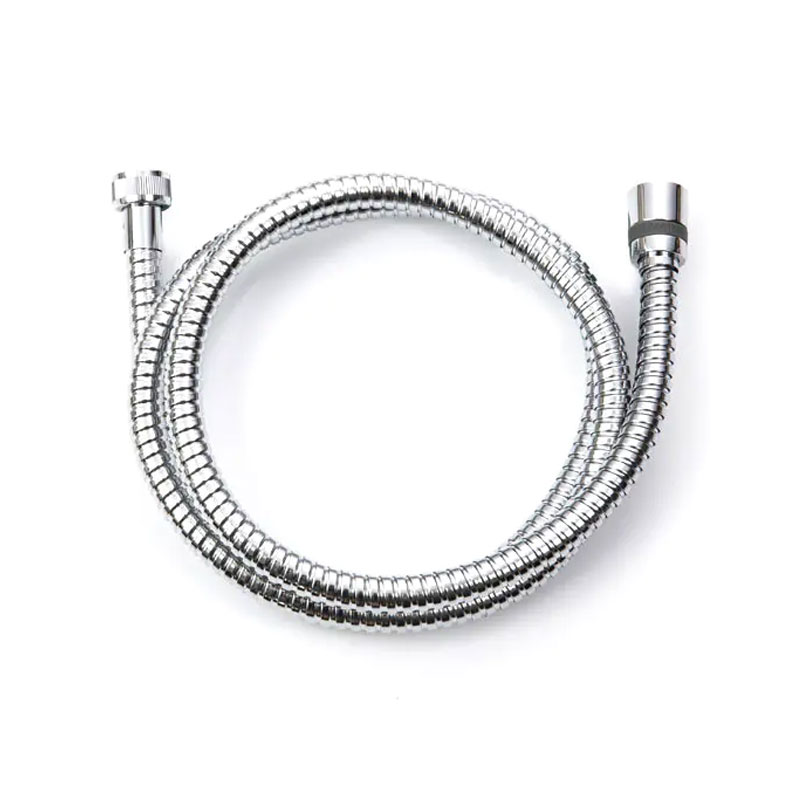
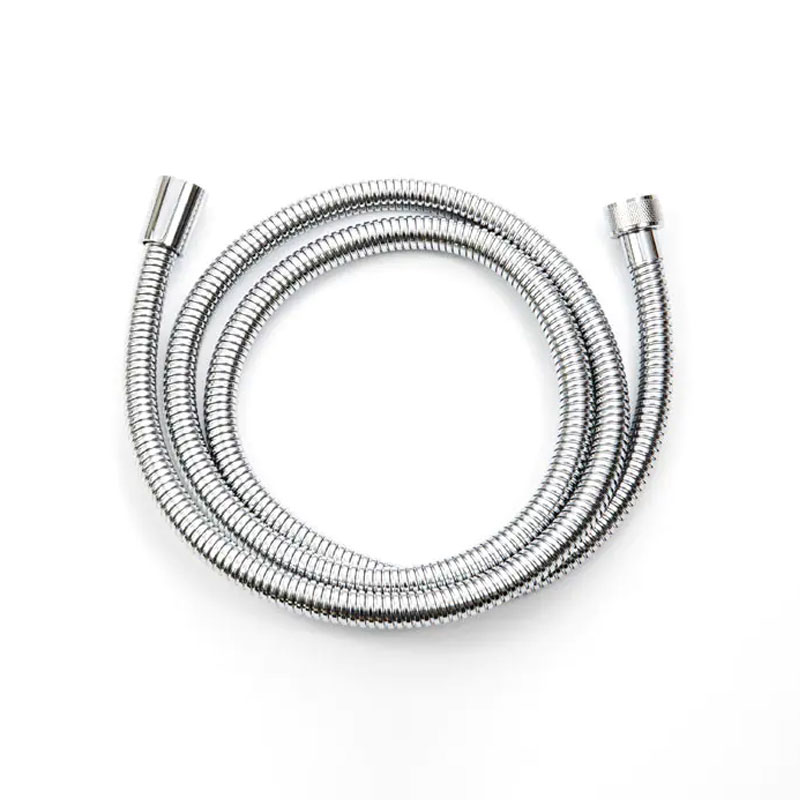
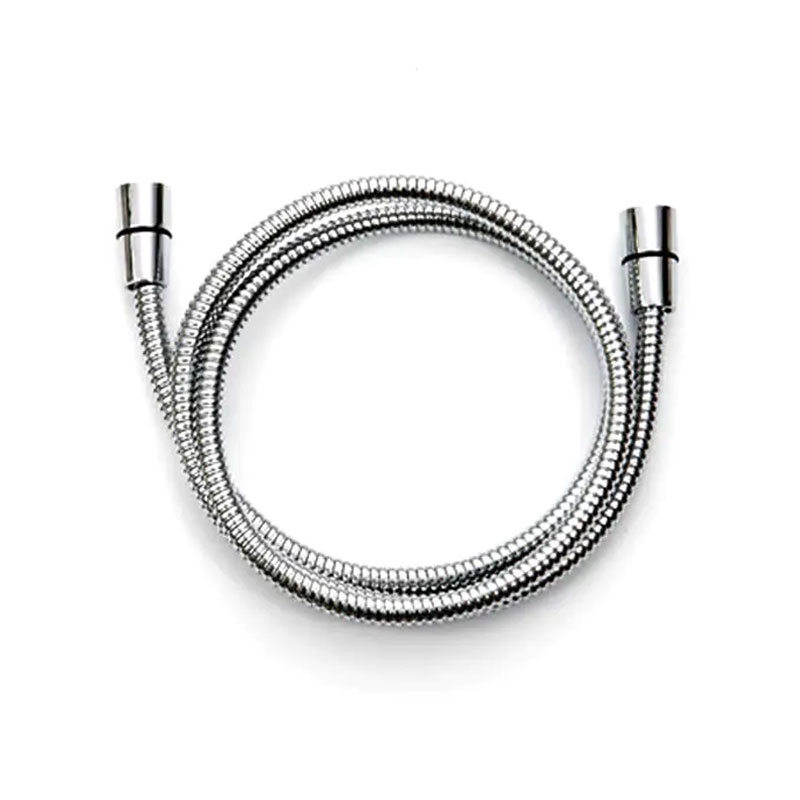
A shower hose is one of the most frequently replaced yet most overlooked components in any bathroom system. From residential retrofits to large-scale hospitality fit-outs, choosing the correct shower pipe configuration directly affects water pressure, hygiene, longevity, and end-user comfort. This guide examines every major category — including hand held shower hose, extra long shower hose, black shower hose, flexible shower hose, and rubber shower hose — from a manufacturer's technical perspective.
What Is a Shower Hose and Why Does It Matter?
The shower hose connects the water supply valve or mixer to the hand held shower hose head, acting as the pressurized conduit for heated or cooled water. Unlike a fixed shower pipe — which is permanently plumbed into the wall — a flexible shower hose allows the user to direct the water stream freely, making it indispensable for assisted bathing, pet care, and precision rinsing tasks.
Choosing the wrong hose leads to premature failure, kinking, limescale build-up, or even contamination of the potable water supply. With the market now offering products ranging from a compact short shower hose at 1.0 m to an extra long shower hose at 3.0 m or beyond, understanding the technical distinctions is critical for procurement decisions.
"The internal bore diameter and wall construction of a flexible shower hose are the two primary factors controlling both flow rate and burst resistance — surface finish is secondary."
Core Construction: Shower Pipe vs. Shower Hose
Fixed Shower Pipe
A rigid shower pipe — typically chrome-plated brass or 304 stainless steel — is installed permanently via threaded joints into the wall or ceiling. It provides maximum stability and eliminates the risk of hose kinking, making it the preferred choice in commercial showers with fixed-height installations. Internal bore is standardized at 15 mm (½") for most residential markets.
Flexible Shower Hose
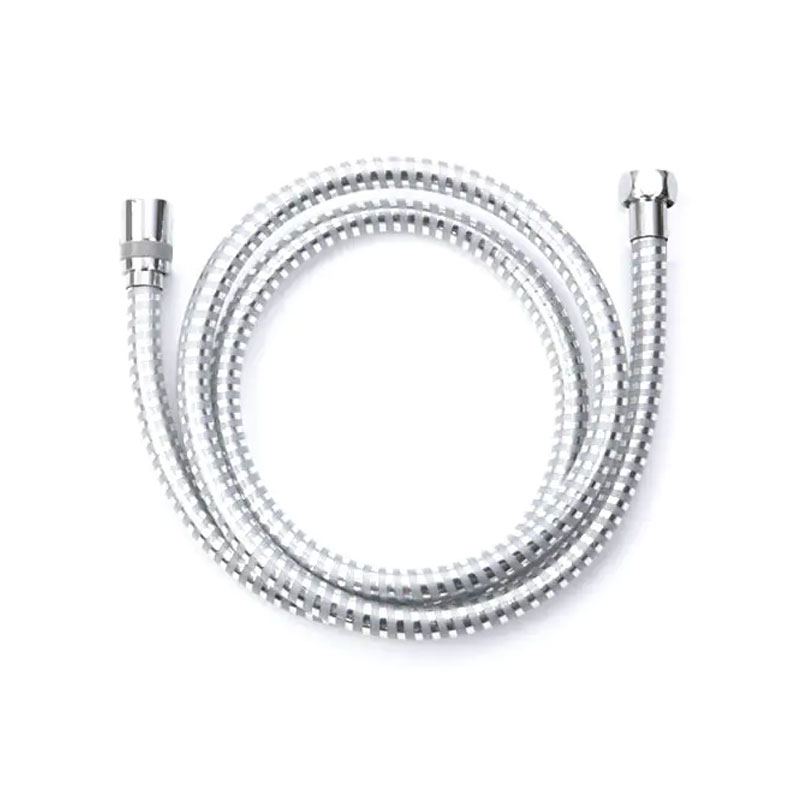
A flexible shower hose uses a multi-layer construction — typically a polymer inner tube, reinforcement braid, and outer metallic or PVC sleeve — enabling articulation without pressure loss. The design accommodates height-adjustable slide bars, portable shower hose kits, and bath shower hose adapters, all without breaking the pressurized circuit.
Material Comparison: Every Type Explained
Material selection governs durability, aesthetics, weight, and compliance with potable water regulations. The table below summarizes the primary options available across the shower hose market:
| Material Type | Inner Tube | Outer Sleeve | Key Advantage | Typical Use Case | Weight (per metre) |
| Stainless Steel Braid | EPDM / PTFE | 304 SS wire | Anti-kink, corrosion-resistant | Standard residential & hotel | ~180 g/m |
| Rubber Shower Hose | Natural/synthetic rubber | Rubber or fabric braid | Excellent flexibility at low temperature | Cold-climate installations | ~210 g/m |
| PVC / Plastic Sleeve | PVC | PVC or ABS | Lowest cost, lightweight | Budget segments, temporary use | ~120 g/m |
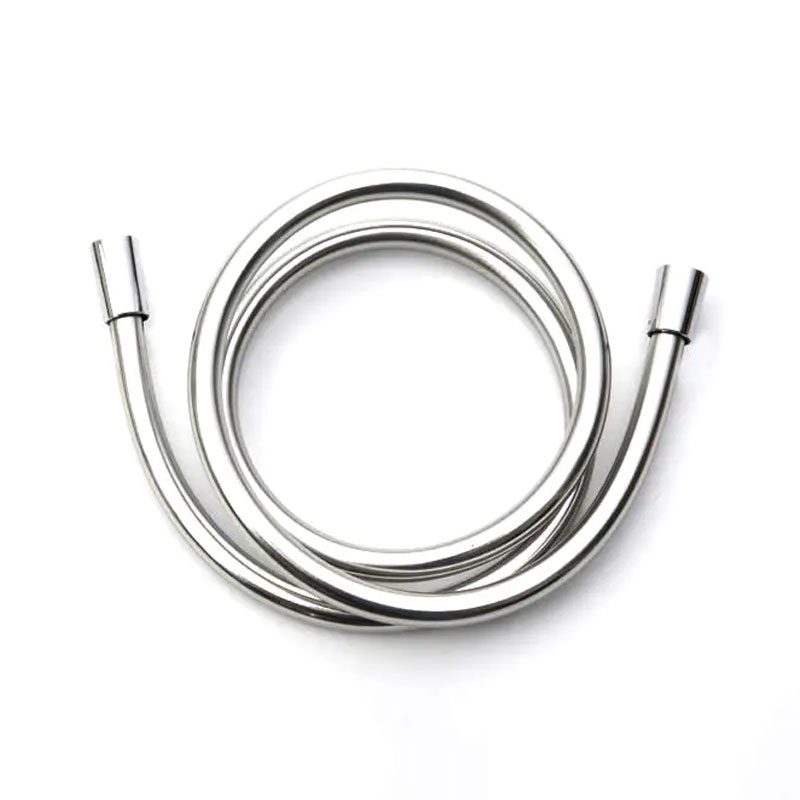
| Smooth Shower Hose | EPDM | Smooth SS or nylon | Easy-clean, anti-limescale surface | Hard-water areas, healthcare | ~165 g/m |
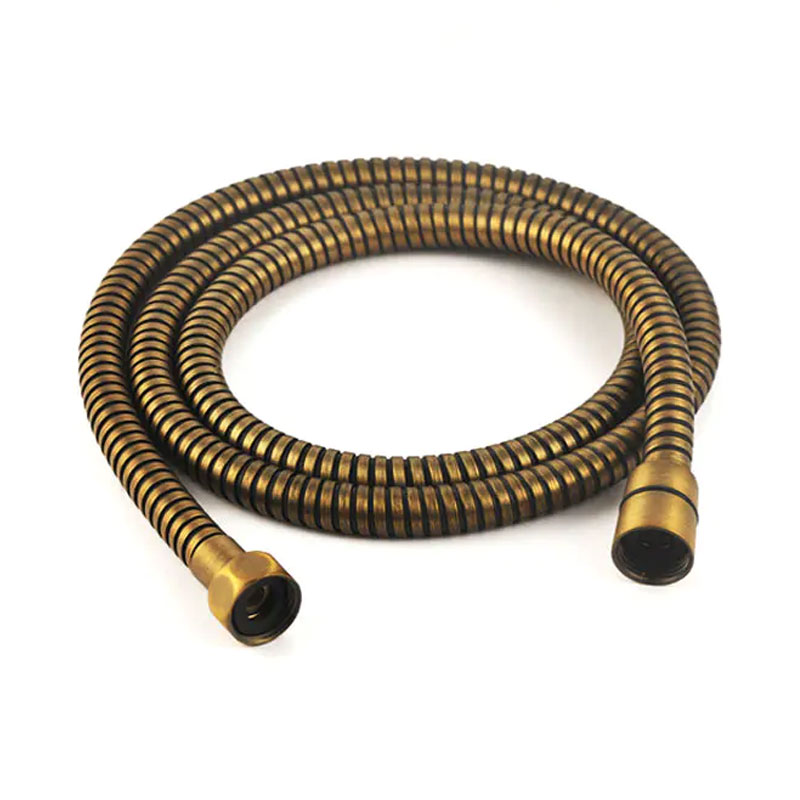
| Black Shower Hose | EPDM | PVD-coated SS or nylon braid | Matte aesthetic, hides water marks | Luxury fit-outs, dark bathroom schemes | ~170 g/m |
The rubber shower hose remains popular in markets where temperatures drop significantly in winter, as synthetic rubber retains flexibility down to –20 °C. Conversely, the smooth shower hose has surged in demand across Northern Europe due to its resistance to calcium carbonate deposition — a direct response to hard-water distribution networks.
Length Options: From Short to Extra Long
Length is among the most misunderstood specifications in shower hose procurement. The stated length typically refers to the hose body only — excluding the swivel nuts at each end, which add approximately 30–50 mm per fitting.
Technical Specifications & Pressure Performance
Understanding the hydraulic behaviour of a shower hose prevents both over-specification (paying for unnecessary pressure resistance) and under-specification (risking burst or flow starvation at peak demand).
| Specification | Standard Grade | Premium Grade | Industrial / Specialist |
| Inner Bore Diameter | 8 – 10 mm | 10 – 12 mm | 12 – 16 mm |
| Working Pressure | ≤ 5 bar | ≤ 8 bar | ≤ 12 bar |
| Burst Pressure | ≥ 15 bar | ≥ 20 bar | ≥ 30 bar |
| Temperature Range | 0 °C – 60 °C | –10 °C – 70 °C | –20 °C – 80 °C |
| Bend Radius (min.) | 50 mm | 40 mm | 35 mm |
| Thread Standard | G ½" BSP | G ½" BSP / NPT | Custom / metric |
| Flow Rate (3 bar) | 8 – 10 L/min | 12 – 15 L/min | 18 – 22 L/min |
For a standard domestic flexible shower hose, a working pressure of 5 bar is adequate for most municipal water supplies in Europe and Asia-Pacific. North American markets — where residential supply pressure can reach 6–8 bar — should specify premium-grade fittings as a minimum. The shower pipe feeding the hose outlet also needs to be rated accordingly to prevent fitting failures at the wall connection.
Surface Finishes and Aesthetic Variants
The exterior finish of a shower hose is no longer purely functional. As bathroom design has evolved toward coordinated schemes, finish-matching has become a key specification criterion.
Application Guide: Matching the Right Hose to the Right Situation
| Application | Recommended Type | Minimum Length | Key Requirement |
| Standard home shower | Flexible shower hose | 1.5 m | Anti-kink, WRAS-compliant inner tube |
| Elderly / disability bathing | Long shower hose with soft grip | 2.0 m | Low-force swivel nuts, anti-scald rating |
| Open wet room / large shower | Extra long shower hose | 2.5 – 3.0 m | High flow rate, reinforced braid |
| Bathtub tap conversion | Bath shower hose with diverter | 1.5 m | Diverter valve compatibility, anti-siphon |
| Outdoor / pet washing | Portable shower hose | 2.0 – 3.0 m | UV resistance, garden hose thread adapter |
| Hard-water regions | Smooth shower hose | 1.5 m | Non-porous outer surface for descaling ease |
| Designer/luxury fit-out | Black shower hose (PVD) | 1.5 m | Finish durability, UV resistance, system coordination |
Installation Best Practices
Correct installation is as important as product quality. Even the highest-specification shower hose will underperform or fail prematurely if fitted incorrectly.
- Always use PTFE thread seal tape on BSP threads — 2 to 3 wraps in the direction of thread engagement. Avoid over-application, which can cause fitting cracks in brass.
- Do not overtighten swivel nuts. Hand-tight plus ¾ turn with an appropriate spanner is sufficient for sealed seats; excessive torque deforms the EPDM washer and creates micro-leaks.
- Allow a natural loop when routing a long shower hose or extra long shower hose. Avoid tight bends tighter than the minimum bend radius specified for the product.
- When fitting a shower hose extension to extend an existing installation, ensure the extension coupling is rated to the same pressure as the primary hose.
- For a bath shower hose diverter setup, confirm that the diverter valve has an integrated anti-siphon device to prevent grey-water back-siphoning into the supply.
- Replace the internal EPDM washer whenever reusing swivel nuts — washers are single-use sealing elements and deform permanently after the first pressurized assembly.
- A portable shower hose used outdoors must be stored away from direct sunlight when not in use, as UV degradation of the outer sleeve begins after sustained exposure above 800 W/m².
Certifications and Regulatory Compliance
Regulatory compliance is non-negotiable when a shower hose or shower pipe is connected to the potable water supply. The following standards apply to major export markets:
| Standard / Certification | Region | Scope |
| WRAS (Water Regulations Advisory Scheme) | United Kingdom | Material safety, anti-siphon, contamination risk |
| KTW / W270 (DVGW) | Germany / EU | Potable water contact materials testing |
| ACS (Attestation de Conformité Sanitaire) | France | Polymer and rubber compounds in contact with drinking water |
| NSF/ANSI 61 | USA / Canada | Drinking water system components — health effects |
| AS/NZS 3718 | Australia / New Zealand | Water supply — health and performance requirements |
| CE Marking (EN 1113) | European Union | Showers for domestic use — general requirements |
| ISO 9001:2015 | Global | Quality management system for manufacturing process |
Manufacturers supplying the hand held shower hose segment for care homes and hospitals must additionally verify compliance with HTM 04-01 (UK) or equivalent national healthcare water safety frameworks, which impose stricter requirements on surface finish, material extractables, and joint-design to minimise Legionella risk.
How to Specify: A Step-by-Step Decision Framework
Frequently Asked Questions
Maintenance, Lifespan & Replacement Intervals
A stainless-steel-braided shower hose in a properly maintained installation will typically serve 8–12 years before the internal EPDM tube begins to show micro-cracking from heat cycling. A rubber shower hose or PVC-sleeve product in the same environment should be inspected annually and replaced at 3–5 years as a standard preventive maintenance interval.
| Hose Type | Expected Service Life | Annual Inspection Points | Replacement Trigger |
| SS braid / EPDM inner | 8 – 12 years | Swivel nut corrosion, braid fraying | Visible braid damage, swivel leak |
| Rubber shower hose | 3 – 5 years | Outer surface cracks, stiffness at bends | Surface crazing, reduced flexibility |
| PVC / nylon braid | 3 – 6 years | UV yellowing, braid separation | Colour change, swelling at fittings |
| Smooth shower hose (SS) | 8 – 10 years | Scale deposit at connectors | Flow restriction, fitting corrosion |
| Black shower hose PVD | 8 – 12 years | Finish delamination at swivel area | Coating loss, white oxidation marks |
Monthly cleaning of the hand held shower hose and its head with a 1:3 white vinegar–water solution removes early-stage limescale before it hardens. The hand shower hose end-cap filter — a mesh screen inside the swivel nut — should be removed and flushed quarterly in high-turbidity supply areas to maintain full flow rate.
- Water Regulations Advisory Scheme (WRAS). Water Fittings and Materials Directory. WRAS, United Kingdom, 2024. wras.co.uk
- DVGW (Deutsche Vereinigung des Gas- und Wasserfaches). W 270: Growth of Microorganisms on Materials for Drinking Water. DVGW, Germany, 2023.
- European Committee for Standardization. EN 1113: Showers for Domestic Use — General Technical Requirements. CEN, Brussels, 2022.
- NSF International. NSF/ANSI 61: Drinking Water System Components — Health Effects. NSF International, Ann Arbor, USA, 2023.
- Standards Australia. AS/NZS 3718: Water Supply — Tap Ware. Standards Australia, Sydney, 2021.
- NHS Estates / DHSC. Health Technical Memorandum HTM 04-01: Safe Water in Healthcare Premises. HMSO, London, 2023.
- International Organization for Standardization. ISO 9001:2015 — Quality Management Systems: Requirements. ISO, Geneva, 2015.
- Kowalczyk, A. et al. "Calcium Carbonate Scaling in Domestic Plumbing Systems: Surface Roughness Effects." Journal of Water Supply: Research and Technology — AQUA, Vol. 72, No. 3, 2023, pp. 201–214.
- Mattox, D. M. Handbook of Physical Vapor Deposition (PVD) Processing, 2nd ed. William Andrew Publishing, Oxford, 2021.
- Frankel, G. S. "Pitting Corrosion of Metals: A Review of the Critical Factors." Journal of The Electrochemical Society, Vol. 145, No. 6, 2019, pp. 2186–2198.