
 English
 Español
 Deutsch
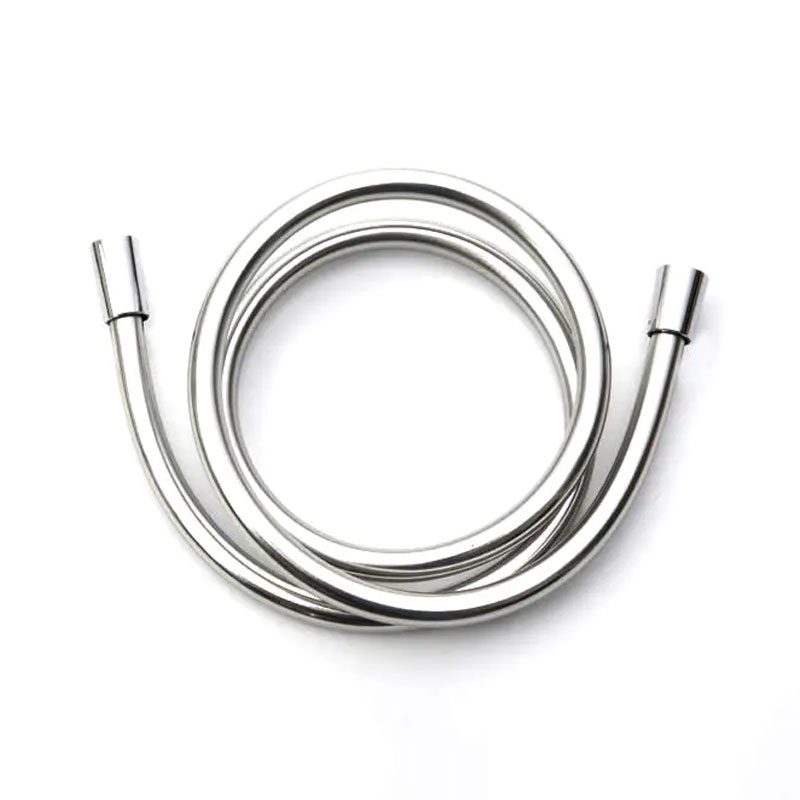
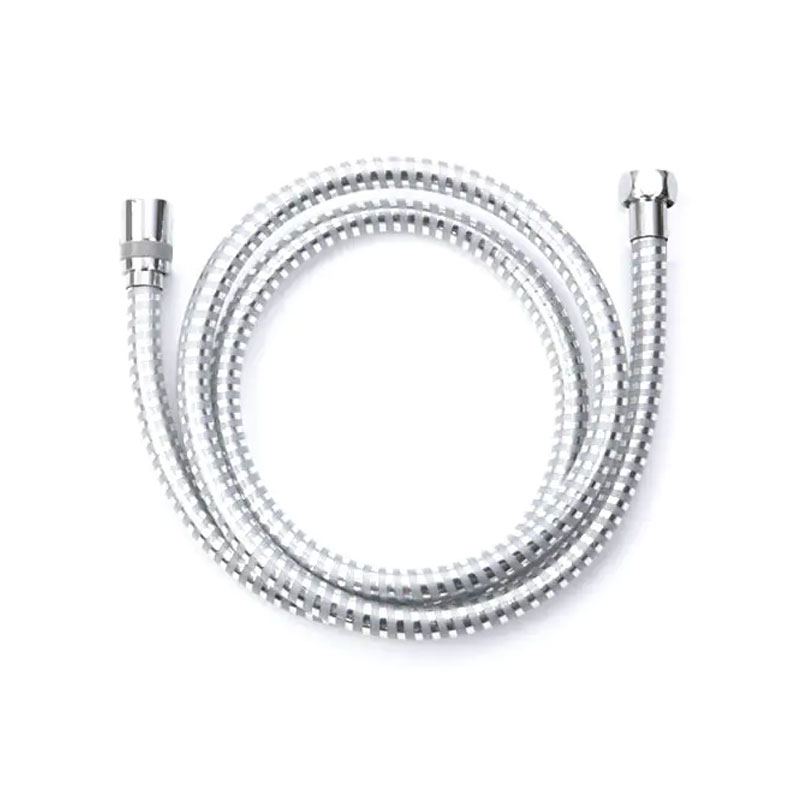
A shower hose is one of the most frequently replaced yet most overlooked components in any bathroom system. From residential retrofits to large-scale hospitali...
READ MORE
news
Height of Hand Shower: Bracket Placement, Hose Length and Comfort Standards
Update:02-09-2026
Content
When your installer asks where to place the holder for a new hand shower, remember that the head itself has no height to decide. A handheld shower travels with your hand, so the two measurements that shape comfort are the position of the bracket or slide bar and the length of the hose behind it. Get both right and one handset serves a six-foot adult, a seated family member and a floor-level cleaning job; get either wrong and you end up stretching a short hose taut or crouching toward a bracket mounted too low.
The short answer: most bathrooms work well with the bracket between 72 and 78 inches (183 to 198 cm) from the floor, or at the primary user's shoulder height, paired with a hose that still reaches the lowest spray point with slack to spare.
Why the Bracket, Not the Head, Sets the Height
Fixed shower heads are standardized around 80 inches (203 cm) from floor to spray face, which is why their height question has a clean answer. A hand shower is different. The spray face goes wherever the hose allows, so the height that matters is where the holder sits on the wall.
Two conventions dominate practice:
- Manufacturer guidance commonly places the holder 72 to 78 inches (183 to 198 cm) up the wall. The handset docks above head level for most users, the hose hangs clear of the floor, and lifting it out takes a simple upward tug.
- Installers who prioritize effortless grabbing prefer the shoulder height of the primary user, roughly 57 to 66 inches (145 to 168 cm) for most adults. The handset sits where you can lift it without raising your arm, which matters for older users and anyone with reduced shoulder mobility.
Neither approach is wrong. The deciding factors are who showers and what the hand spray has to reach, which the table below summarizes.
| Scenario | Suggested bracket position | Why it works |
|---|---|---|
| Standing use by adults | 72 to 78 in (183 to 198 cm) | Handset docks above head level and lifts out with a simple upward tug |
| Effortless grabbing | Shoulder height, 57 to 66 in (145 to 168 cm) | Handset lifts without raising the arm, easier for older users |
| Mixed or growing households | Slide bar with 24 to 31 in (60 to 80 cm) of travel | One rail serves tall users, children and seated washing |
| Seated or assisted showering | Bar bottom at 36 to 48 in (91 to 122 cm) | Reachable from a shower seat without standing or stretching |
Matching the Height to the People Who Use It
Standing households
For households where everyone showers standing, the 72 to 78 inch band suits most users under six feet (183 cm). Taller users can push the bracket higher, but test the docking motion first: if someone has to stand on tiptoes to return the handset, the bracket is too high, and a dropped handset on tile is an expensive way to learn that.
Accessible and seated showering
Seated showering changes the math. A bracket for seated use typically sits 36 to 48 inches (91 to 122 cm) from the floor, within easy reach from a shower seat. Accessible-design guidance goes further: North American ADA specifications for accessible showers call for a hand shower with a hose at least 59 inches (1.5 m) long, carried on a slide bar so the unit works both as a fixed head and a handheld sprayer. Even outside regulated projects, that 59-inch figure is a sensible minimum for any hose.
Children and mixed households
A slide bar resolves most family compromises. Rails typically offer 24 to 31 inches (60 to 80 cm) of vertical travel, so one rail can serve a tall adult at the top, a child at the bottom and a seated user anywhere between. Position the rail so its top sits near 78 to 80 inches and its bottom around hip height, and check that the lowest position still leaves the handset clear of the tub or tray edge.
Hose Length: The Detail That Undermines Good Bracket Placement
The measurement most installations get wrong is hose reach, and it takes about thirty seconds to work out. Measure from the bracket down to the lowest point you will actually spray: floor level for cleaning and pet washing, knee level for bathing children, seat level for assisted showering. Then add 10 to 20 percent slack for the natural curve of a hanging hose.
Standard lengths map onto that calculation directly. A 1.5 m (59 in) hose is the common default and works well from a shoulder-height bracket. From a 72 to 78 inch bracket, however, the same hose stops reaching useful work at roughly chest height once slack is accounted for. A 1.75 m (69 in) hose covers mid-range tasks, while a 2 m (79 in) hose reaches the floor from a high bracket with margin to spare, which is why slide-bar installations and family bathrooms increasingly specify it.
An extensible hose compresses this decision. It rests short while docked, then stretches when pulled, covering roughly the 1.5 to 2 m range in a single product, which is convenient where the hose should stay tidy and out of view between uses.
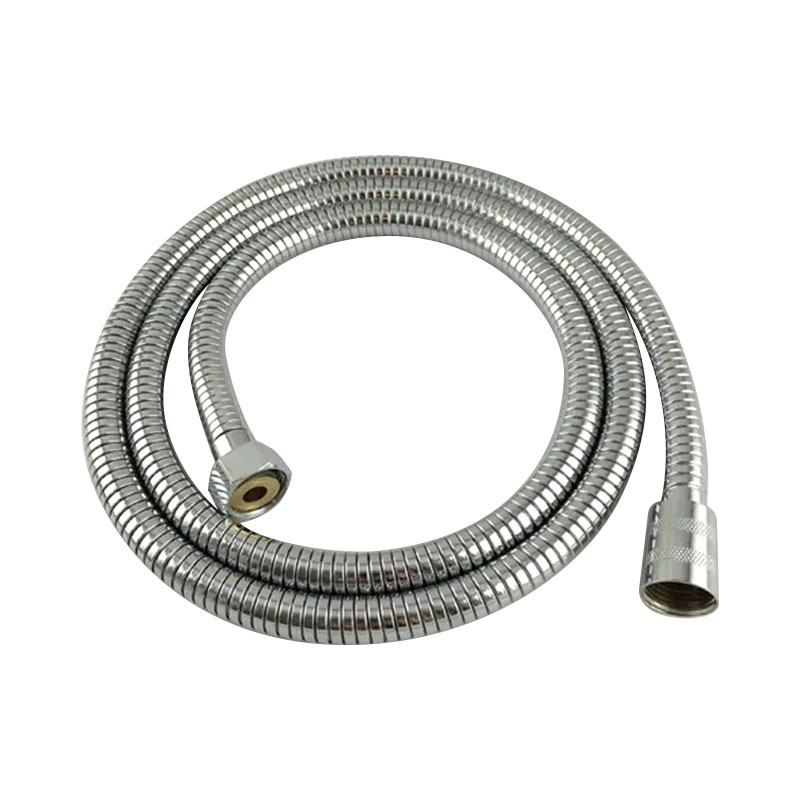 Extensible Chrome Shower Hose That Stretches from 1.5 to 2.1 mThis SUS201 double-lock hose extends from 1.5 m to 2.1 m with brass nuts and inserts at 15 bar. It suits setups needing a tidy hose that stretches on demand, as discussed in the surrounding length guidance.View Product →
If you are unsure how to match hose length, structure and fittings to your setup, our guide on how to choose a bathroom hose walks through the selection criteria step by step.
How a High Bracket Changes Hose Stress
A hand shower docked at 78 inches leaves several feet of hose hanging in a loop, and every use adds rotation: pull the handset out, turn to rinse your back, return it to the bracket. Over months, that rotation accumulates as twist along the hose body, which is what produces kinking, reduced flow and early failure at the couplings. Anti-twist construction addresses this directly by letting the inner tube rotate independently of the outer cover, which is why dedicated anti-twist models exist across the shower hose market.
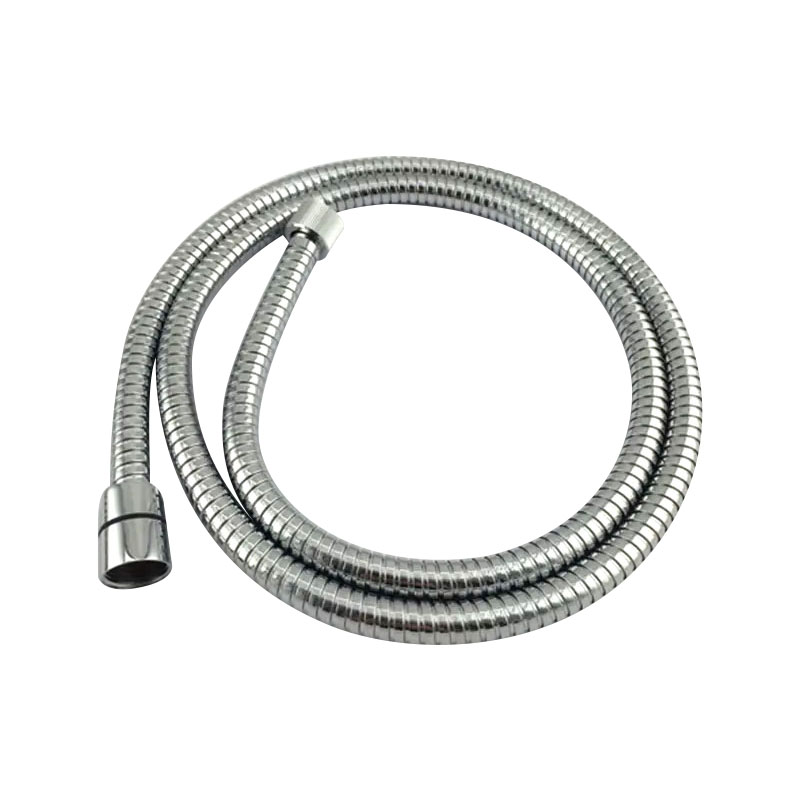 Anti-Twist SUS201 Shower Hose with Brass NutsA 1.5 m SUS201 chrome hose with anti-twist brass nuts and brass inserts, rated at 15 bar. Its rotating construction reduces twist buildup from high-bracket installations, addressing the kinking problems described nearby.View Product →
Height also changes bend behavior. A longer hose from a high bracket means tighter coils when the handset docks low, and a hose that holds a kink restricts flow and ages quickly at the crease. If the bracket must sit high and the tasks reach low, structure and material choices carry more weight than they do in a simple shoulder-height installation.
Choosing Hose Material for Reach and Flexibility
Material determines how a hose behaves at the extremes of its reach. Silicone stays soft and flexible regardless of water temperature: it does not stiffen in a cold bathroom the way PVC can, and it resists the cracking and hardening that eventually affect plastic covers. That flexibility is exactly what a high bracket demands, since the hose is asked to curve, loop and swing repeatedly through its service life. Silicone models are also available with KTW certification for drinking-water contact, which matters for European-market assemblies.
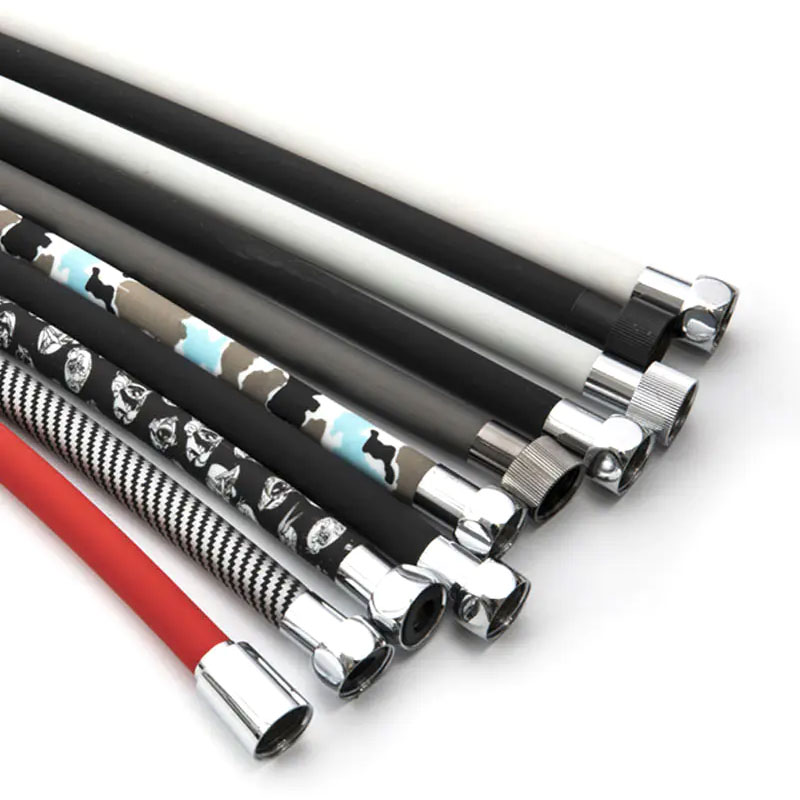 Flexible Silicone Shower Hose for Drinking-Water UseSilicone stays soft and flexible at any water temperature, resisting the stiffening and cracking that affect plastic covers. That makes it well suited to high-bracket installations requiring repeated bending and drinking-water-safe material.View Product →
PVC remains the economical choice and handles everyday standing use well, while stainless steel braided hoses bring a firmer feel and strong durability. Whatever the material, European buyers should confirm compliance with CE EN1113, the standard covering the mechanical characteristics of shower hoses, including endurance under repeated pulling, bending and twisting. A hose that survives those tests at full extension is precisely what a high-bracket installation needs, because full extension is where marginal products fail.
A Short Checklist Before You Drill
Work through these points in order and the height decision largely makes itself:
- Measure the shoulder height of the shortest frequent user; anything at or slightly above that level lifts and docks easily.
- Mark the bracket between 72 and 78 inches for standing use, or plan a slide bar with its top near 78 to 80 inches.
- Fix the lowest spray point you will actually use: floor, shower seat or child-level washing.
- Add 10 to 20 percent slack to that drop and choose the hose length: 1.5 m for shoulder brackets, 2 m for high brackets and low-reach tasks.
- Check the connections at both ends, since most hand showers take a standard nut at the handset and a cone or flat nut at the wall outlet.
- Swing the assembled hose through its full arc before fixing the wall anchors; if it pulls taut at any point, step up one length.
The same logic applies one level up for brands, importers and assemblers. A well-specified hose program should cover the mounting heights customers actually install, from shoulder brackets to slide bars and seated applications. We manufacture shower hoses in silicone, PVC and stainless steel, in anti-twist, extensible, slim and double-lock structures, and in colors matched to customer samples, backed by ISO 9001 production and certifications including CE EN1113, WRAS, KTW and ACS. Comparing structures and finishes in our shower hose series is the fastest way to see how those options line up.
News
-
-
The short answer is mostly yes, but not always. Most shower hoses are built around a standard 1/2-inch BSP (British Standard Pipe) thread at both ends, so a re...
READ MORE -
Shower room accessories acceptance standard, shower room: separate shower cubicle. Modern homes have higher and higher requirements for bathroom facilities. Man...
READ MORE -
A handheld shower head is one of the easiest bathroom upgrades there is, and most installations take about fifteen minutes with an adjustable wrench and a roll...
READ MORE -
Direct Conclusion: Silicone Shower Hose vs PVC in Long-Term Durability The practical difference is clear: a Silicone Shower Hose significantly outperforms PVC ...
READ MORE -
If you have ever stood in front of a shower hose display wondering whether any of them will fit your bathroom, you are not alone. A shower hose looks like a si...
READ MORE

Contact us
-

-

+86-574-62321667
-

No.2 Chuangsheng West road, Wuma Industry Area, Lubu Town, Yuyao City, Zhejiang, China
Copyright © 2025 Yuyao Doflex Sanitary Ware Hose Co., Ltd. , All Rights Reserved.
 Wholesale Bathroom Shower Hose Manufacturers