
 English
 Español
 Deutsch
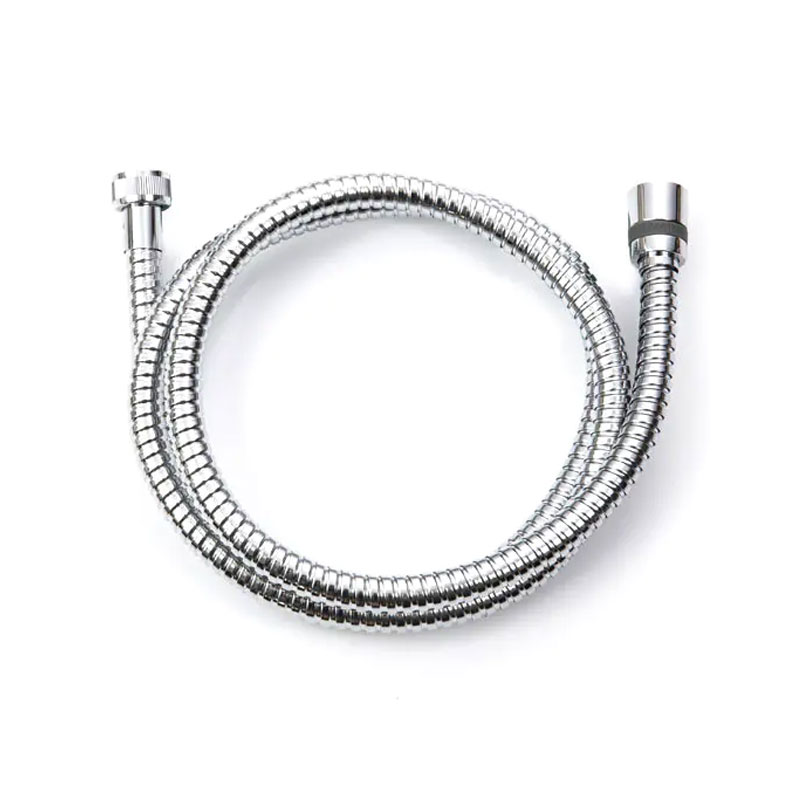
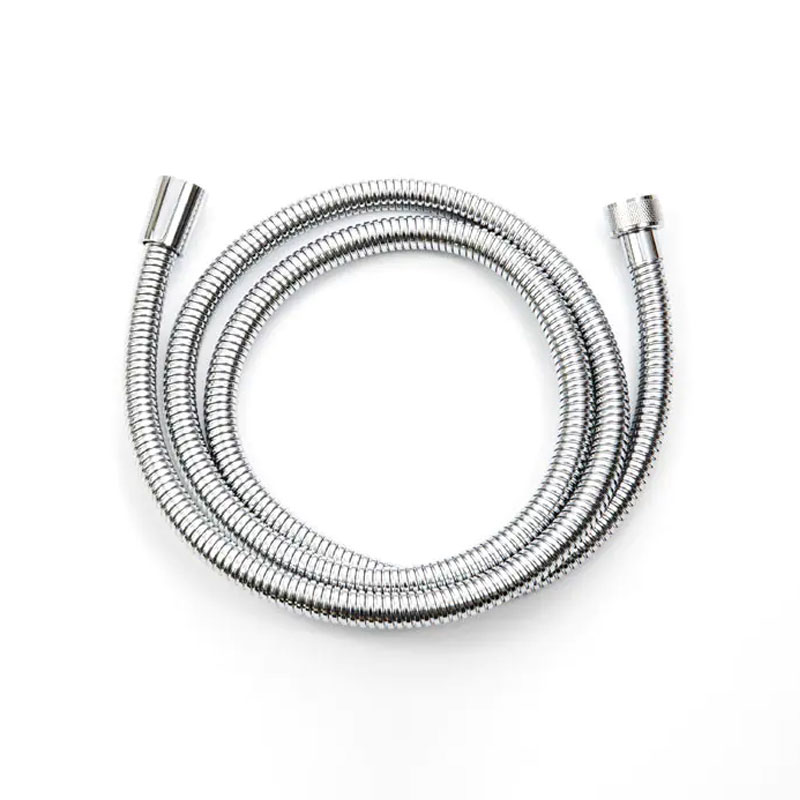
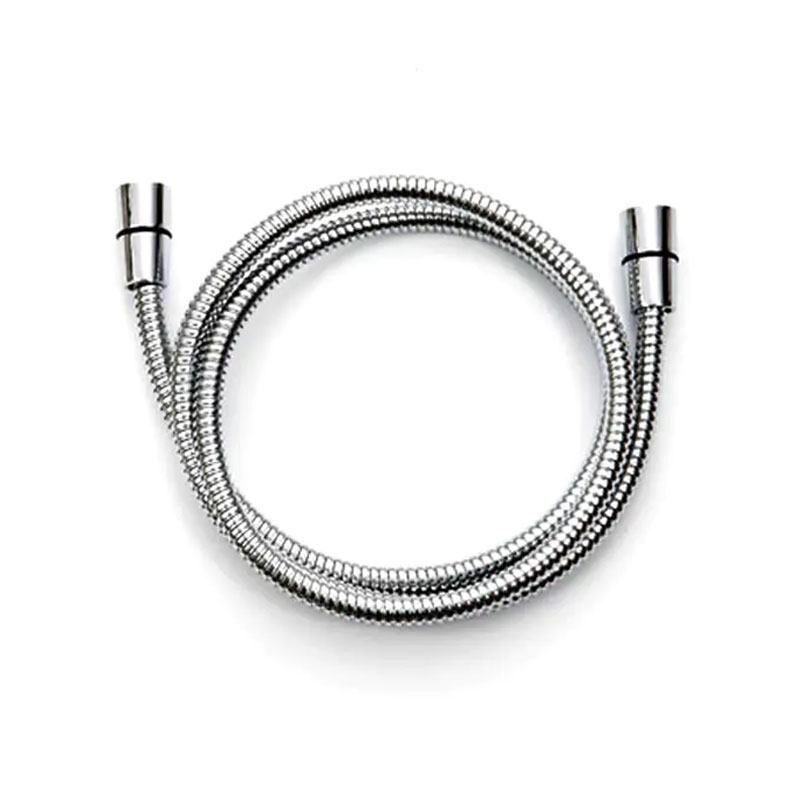
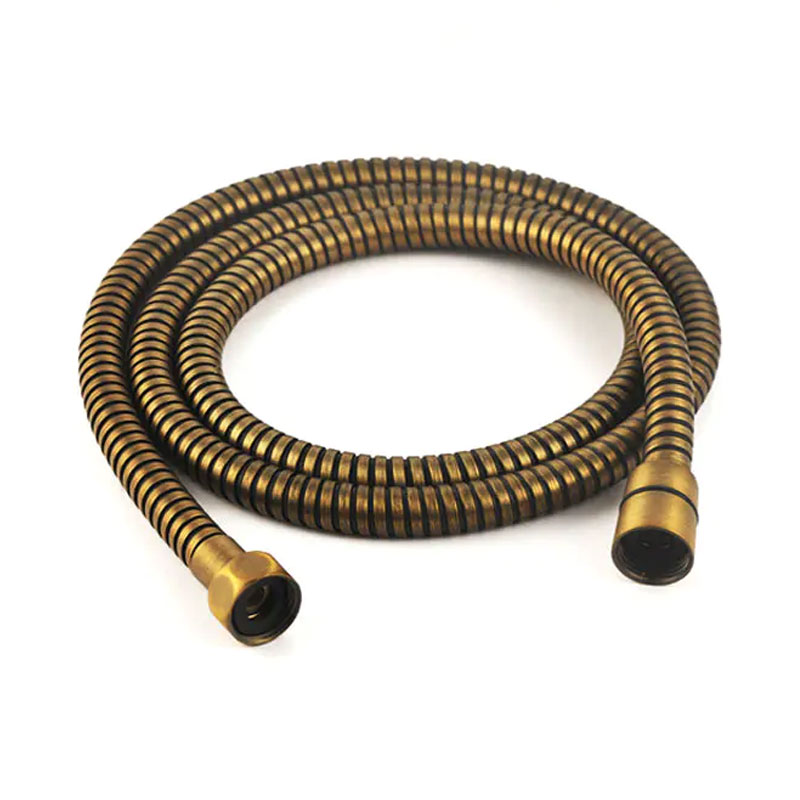
Measuring a shower hose takes about five minutes, and nearly every failed replacement we hear about comes down to skipping one of those five minutes. The hose ...
READ MORE
news
How to Shut Off a Shower Faucet Safely: Valves, Main Supply, and Next Steps
Update:16-11-2026
Content
- 1 Start With the Two Levels of Shutoff
- 2 Find the Fixture-Level Shutoff Valves
- 3 Turn Off the Water at the Main Valve
- 4 A Safe Step-by-Step Shutoff Routine
- 5 If the Handle Spins or the Water Keeps Running
- 6 Which Shutoff Point Should You Use?
- 7 While the Water Is Off, Give the Hose a Look
- 8 When It Is Time to Call a Plumber
The shower is running, the handle will not budge, and the sound of water disappearing down the drain suddenly feels expensive. Almost every homeowner meets this moment sooner or later, and the way out almost always starts with one simple question: where does this shower actually get its water? Once you know that, shutting the supply off turns into a five-minute job instead of a panic call. What follows is the same routine we walk customers through when they need to work on a shower connection without flooding a bathroom.
Start With the Two Levels of Shutoff
Water reaches your shower through a chain of connections. At the far end of that chain sit small stop valves that serve only that one fixture. At the near end sits the main valve for the whole property. Turning the shower handle does neither of those jobs — it only stops flow at the cartridge inside the valve body, while the pipes behind the wall stay fully pressurised.
That distinction matters. If you are simply done washing, the handle is enough. If you need to open a fitting, swap a hose, or replace a cartridge, you have to close one of the two real shutoff points. Whenever possible, choose the fixture-level stops, because they leave the kitchen, the laundry, and the second bathroom usable while you work.
Find the Fixture-Level Shutoff Valves
These are small valves fitted on the hot and cold lines just before they enter the shower valve body. In newer builds and in most thoughtful renovations they are there. Look in these spots:
- A removable access panel on the wall opposite the shower, often inside a closet or at the end of a hallway.
- Under the tub, or inside the vanity cabinet when the shower shares a wall with the bathroom sink.
- In the basement or crawlspace directly below the bathroom, where the pipes turn upward.
- Behind the escutcheon plate — the decorative ring around the handle — on certain models, where a screwdriver slot sometimes hides.
Fixture stops come in two common shapes. One is a small oval handle you can turn by hand. The other is a slot-headed screw that needs a flathead screwdriver or a sturdy coin. Both close by turning clockwise, and both should be turned gently until they seat. If a stop feels frozen, stop pushing and treat it as a repair item rather than forcing it and snapping the stem.
Turn Off the Water at the Main Valve
Plenty of older homes and some apartment buildings have no local stops at all, which is exactly why so many people search for how to shut off a shower faucet and end up reading about mains. Go to where the supply enters the property, usually near the meter, in a utility closet, or at the front of the basement. A lever handle is a ball valve — a quarter turn is enough. A round wheel is a gate valve and needs several turns clockwise until it feels firm.
Before you walk away, open a tap lower in the house, such as a bathtub spout or a laundry sink. If water slows to a trickle and then stops, the main is doing its job. If it keeps running at full pressure, you have closed the wrong valve or a second supply line is still open. In a shared building, the shower may be fed from a riser serving several flats, and the shutoff might sit in a service cupboard that only the building manager can open.
A Safe Step-by-Step Shutoff Routine
Order matters more than strength. Work through these steps and you avoid both a surprise soaking and an air lock in the line:
- Turn the shower handle to a warm mid-position so the line begins to drain as you work.
- Close the fixture stops, or the main valve, turning clockwise until seated.
- Open the shower again and wait about thirty seconds — flow should fade almost immediately.
- Open a lower tap to drain residual water from the pipe run.
- Leave the shower handle open while you work, giving trapped water somewhere to escape.
- When the job is done, close the handle, reopen the stops slowly, and check every fitting for weeping before restoring full pressure.
Reopening slowly is the part people skip. Slamming a valve open sends a pressure surge through old connections, and that is when a joint that was fine ten minutes ago starts to seep.
If the Handle Spins or the Water Keeps Running
Sometimes the supply is perfectly fine and the fault sits inside the valve. A handle that turns with almost no resistance, or spins freely, usually means the set screw underneath has loosened or the splines inside the handle have stripped. Pop off the index cap, tighten the screw, and see whether the handle re-engages. If it still slips, the handle or the adapter is worn and needs replacing.
If the handle engages properly but water keeps passing, the cartridge is the likely culprit — mineral scale wears the sealing faces and the ports never fully close. On two-handle showers, worn seat-and-spring washers cause the same symptom. Either way, close the fixture stops or the main first, then disassemble. Never open a valve body with the supply live, even briefly.
Which Shutoff Point Should You Use?
Most homes offer at least one of these three options. Match the choice to the job in front of you:
| Shutoff point | Where to find it | Best suited to | Watch out for |
|---|---|---|---|
| Fixture stop valves | On the hot and cold lines just behind the shower valve | Cartridge swaps, hose changes, short repairs | Small handles seize; turn gently |
| Main house valve | Where the supply enters, often near the meter | When no local stops exist | Cuts water to the entire property |
| Building riser valve | Service cupboard or plant room | Apartments on a shared supply | May need the building manager |
While the Water Is Off, Give the Hose a Look
With the line drained, the shower outlet is right in front of you, and it is the easiest moment you will ever get to inspect the hose. Hoses fail quietly: a pinhole in the inner tube, a jacket that has gone stiff and cracked, or a perished cone washer inside the nut. If yours is more than a few years old, or if it now stays kinked after you straighten it, replacing it while the water is already off saves you a second round of this whole procedure.
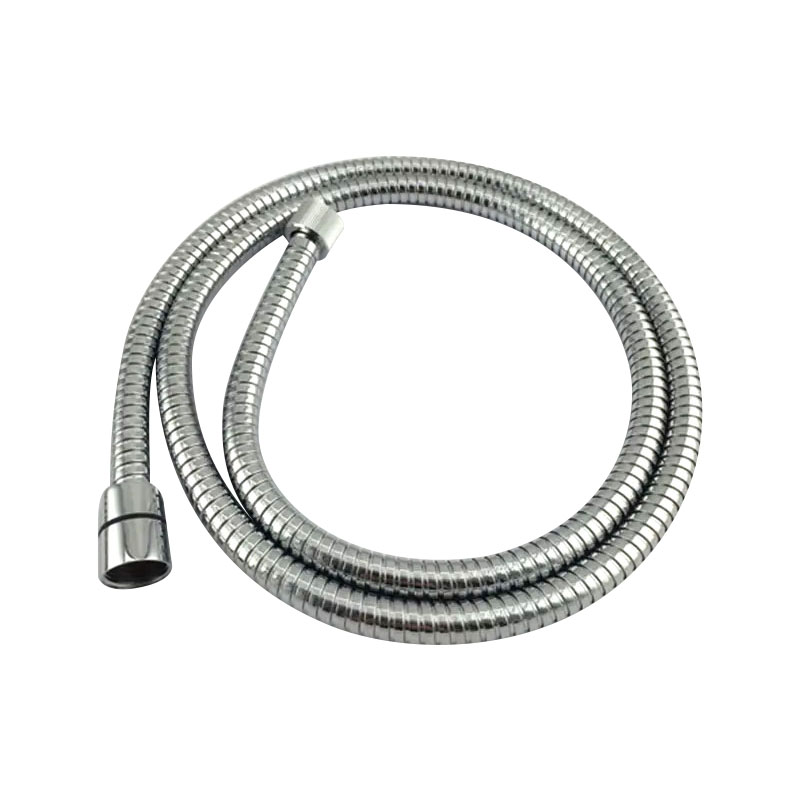 Anti-Twist Shower Hose with Brass NutsA 1.5 m chrome shower hose with anti-twist brass nuts and brass insert, suited to replacing a kinked hose during outlet maintenance.View Product →
If someone in the household likes to spin the head around while rinsing, an anti-twist hose is the sensible upgrade. The inner assembly rotates independently of the outer sleeve, so the hose returns to shape instead of coiling into a knot that tugs at the nut every time the shower is used.
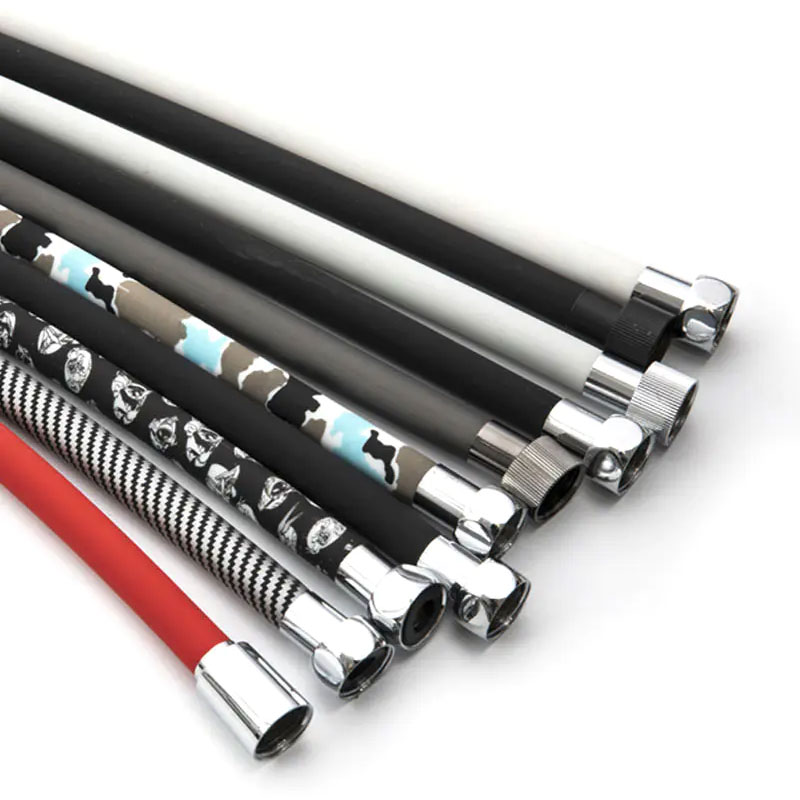 Silicone Shower Hose by Doflex or OEMA silicone shower hose from Doflex/OEM that stays soft in hot water, offered with CE and ISO9001 certification and no minimum order quantity.View Product →
Material matters just as much as structure. Silicone stays soft in hot water and does not harden the way older PVC jackets tend to, which is why we build a large part of our range from it. If you are unsure about length, nut size, or which material suits your setup, our guide to choosing a bathroom hose walks through the measurements worth taking before you order.
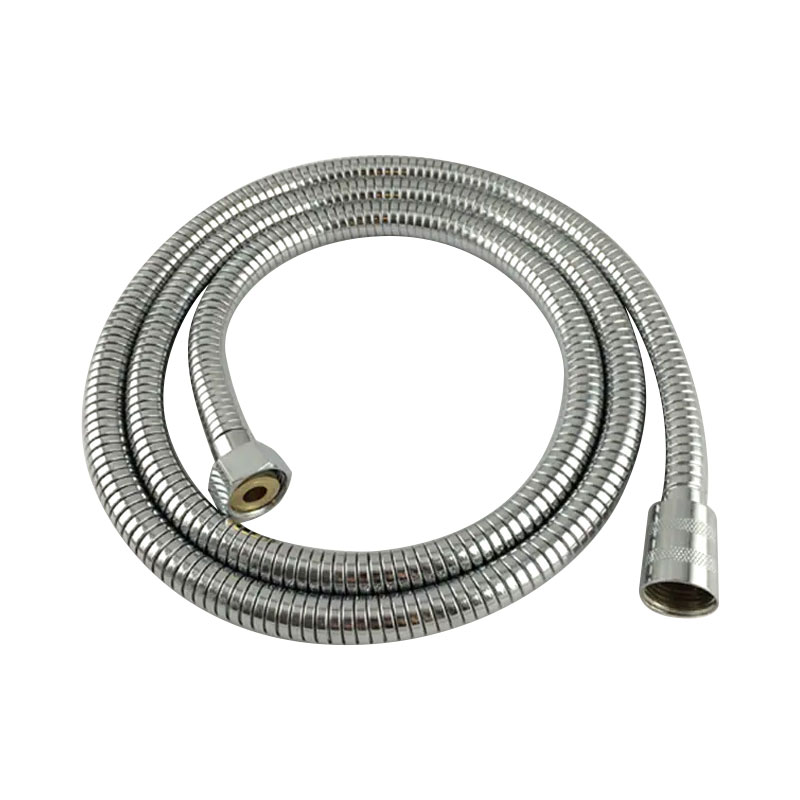 Extensible Shower Hose EX005CRA 1.5 m chrome shower hose that extends to 2.1 m, useful where a tight cubicle or low outlet needs extra reach.View Product →
A tight shower cubicle or a low outlet sometimes calls for extra reach rather than extra length, and an extensible hose handles that without leaving loops of surplus hose hanging on the wall. We have been making hoses in Yuyao since 2004, and the questions we get from fitters and homeowners are remarkably consistent — reach, flexibility, and how long the thing lasts. You can read more about our workshop, testing, and certifications if that side of things interests you.
When It Is Time to Call a Plumber
Some situations are worth handing over. Call a professional if the main valve will not close fully, if there is no accessible shutoff anywhere in the property, or if the pipework is soldered or glued in a way that leaves no service point. The same applies when a stop valve snaps or weeps after you close it, when water appears in a ceiling below the bathroom, or when the leak sits behind a tiled wall you cannot open without damage.
There is also a practical line: if you have closed the supply, drained the line, and still cannot identify where the water is coming from, more disassembly rarely helps. A plumber with a camera and the right cartridge in the van will usually finish faster than a second trip to the hardware shop.
Shutting off a shower faucet is really about knowing your own plumbing — the stops behind the wall, the main by the meter, and the order in which to use them. Take five minutes to find those valves today, tag them if they are unlabelled, and the next dripping handle or tired hose will be an inconvenience rather than an emergency.
News
-
-
Some shower heads are mounted too close to the wall, leaving you to squeeze into a narrow spray zone. Others sit at an awkward height, or you simply want the f...
READ MORE -
Few things ruin a shower faster than a spray of water from a hole in the hose. The good news is that you do not have to live with it or call a plumber right aw...
READ MORE -
Choosing a new shower head sounds like one of the simplest bathroom upgrades, until you start comparing models. Fixed or handheld? Chrome or matte black? Rain ...
READ MORE -
If your hair feels brittle and your skin looks dry even after switching to sulfate-free shampoo and moisturizing creams, the problem may not be your products—i...
READ MORE -
Attaching a shower hose is a five-minute job if you know where the water actually seals. Most people assume the metal threads create the watertight connection....
READ MORE

Contact us
-

-

+86-574-62321667
-

No.2 Chuangsheng West road, Wuma Industry Area, Lubu Town, Yuyao City, Zhejiang, China
Copyright © 2025 Yuyao Doflex Sanitary Ware Hose Co., Ltd. , All Rights Reserved.
 Wholesale Bathroom Shower Hose Manufacturers