
 English
 Español
 Deutsch
If your hair feels brittle and your skin looks dry even after switching to sulfate-free shampoo and moisturizing creams, the problem may not be your products—i...
READ MORE
news
Do Shower Head Filters Work? An Honest Manufacturer's Look at the Evidence
Update:23-09-2026
Content
If you have ever stepped out of the shower with tight, itchy skin, dull hair, or a faint swimming-pool smell that follows you out of the bathroom, you have probably wondered whether a shower head filter is worth buying. We have asked ourselves the same question from an unusual angle. As a manufacturer of shower hoses and sanitary ware fittings based in Yuyao, on China's eastern coast, since 2004, we spend our days thinking about everything that happens between the wall connection and the moment water touches your skin. The honest answer is this: shower head filters do work, but only for specific problems, and the results you feel depend heavily on the quality of the entire shower setup, not the cartridge alone.
How Shower Head Filters Actually Work
A shower head filter is not a miniature water purification plant. It is a compact cartridge filled with one or more treatment media, each designed to handle a particular contaminant while hot water flows through at shower pressure. So when people ask whether these filters work, the more useful question is which media are inside and whether they match the actual problems in your local water.
Most quality filters layer several media together, because no single material handles every water problem equally well. The table below summarizes the four you will encounter most often.
| Filter Media | Best at Removing | Good to Know |
|---|---|---|
| KDF-55 (copper-zinc alloy) | Free chlorine, some heavy metals | Performs well in hot water and offers a long service life |
| Activated carbon | Chlorine, odors, organic compounds | Loses capacity quickly at high shower temperatures |
| Calcium sulfite | Free chlorine, fast | Effective even in very hot water; needs regular replacement |
| Vitamin C (ascorbic acid) | Chlorine and chloramine | Depletes faster under heavy daily use |
One technical note worth remembering: free chlorine is the easiest target, and chlorine reduction is where shower filters have their strongest track record. Chloramine, a more stable disinfectant used by some water utilities, is harder to remove and generally needs vitamin C based media or longer contact time. If your city treats water with chloramine, confirm the filter is rated for it before you buy.
What a Shower Filter Can and Cannot Do
Realistic expectations are everything in this product category. Based on how these media behave in practice, here is a fair split.
What filters generally do well
- Reduce free chlorine noticeably; the smell is usually the first thing to fade
- Trap rust, sand, and sediment that enter through older supply pipes
- Cut down chlorine vapor carried in the steam of a hot shower
- Leave water feeling gentler on skin and hair, especially for sensitive users
What they cannot do
- Truly soften hard water; removing dissolved calcium and magnesium requires ion exchange equipment far larger than any shower head cartridge
- Remove every heavy metal, bacterium, or emerging contaminant; a small cartridge cannot match a certified whole-house system
- Work forever; media capacity is finite, and hard water shortens it further
When a listing claims its filter softens water, purifies everything, and cures skin conditions all at once, that is marketing reaching further than the chemistry. The legitimate claim is reduction: less chlorine, fewer particles, less odor. Judged on that standard, these products hold up.
When You Will Actually Notice the Difference
Not every household experiences the same benefit, and that is normal. From conversations with customers and distributors over the years, the change shows up most clearly in three situations. First, sensitive skin and hair: chlorine strips away natural oils, so people prone to dryness or irritation often report less tightness and less frizz after a few weeks of use. Second, older buildings: if the plumbing is decades old, the layer of rust and sediment visible in a used cartridge after one month tells you exactly what your skin had been showering in. Third, heavily chlorinated municipal supplies: some regions dose aggressively, and the improvement in smell alone can be striking.
We will also be honest about the scientific picture. Laboratory testing consistently shows solid chlorine reduction when cartridges are fresh, and dermatologists broadly agree that chlorine can aggravate sensitive skin. But large-scale clinical evidence that shower filters treat eczema or hair loss remains thin. Treat a shower filter as a sensible layer of protection, not a medical device.
Why the Rest of Your Shower Setup Matters Just as Much
Here is the part most articles skip: the filter is only one link in the chain. Filtered water still has to travel through your hose and out of the shower head before it reaches you. A hose with internal buildup, or a head clogged with scale and biofilm, can undo some of the care you took at the filter stage. Flow matters too, because filter media need contact time with the water; a kinked or twisted hose creates inconsistent pressure and an uneven spray pattern.
This is where our own experience becomes relevant. Silicone shower hoses stay supple in hot water and resist the hardening and cracking that wear down ordinary hoses over time, and select models carry KTW certification for water-contact safety. For setups where water quality at the point of contact is the whole point, our pure water type sprayer and shower header was designed exactly for that scenario. We cover the material trade-offs in more depth in our complete professional guide to shower hose types, materials, and standards.
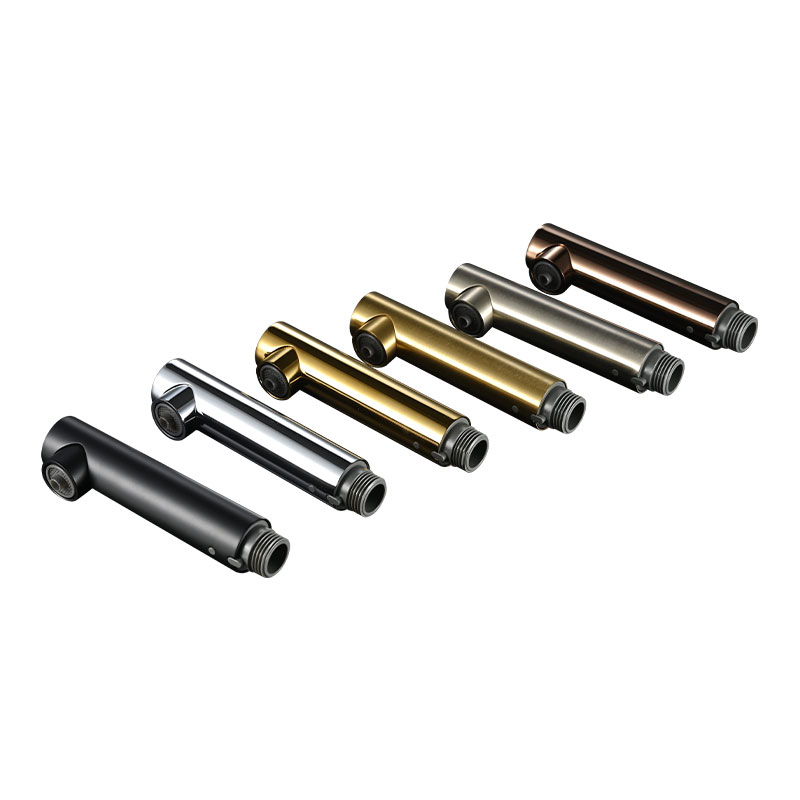 Pure Water Type Sprayer and Shower Header for Kitchen Water FiltrationDesigned for kitchen pure water flexible hose series, this sprayer and shower header is made from 304 stainless steel for longer service life, with a custom mold for stable quality and optional customized colors.View Product →
 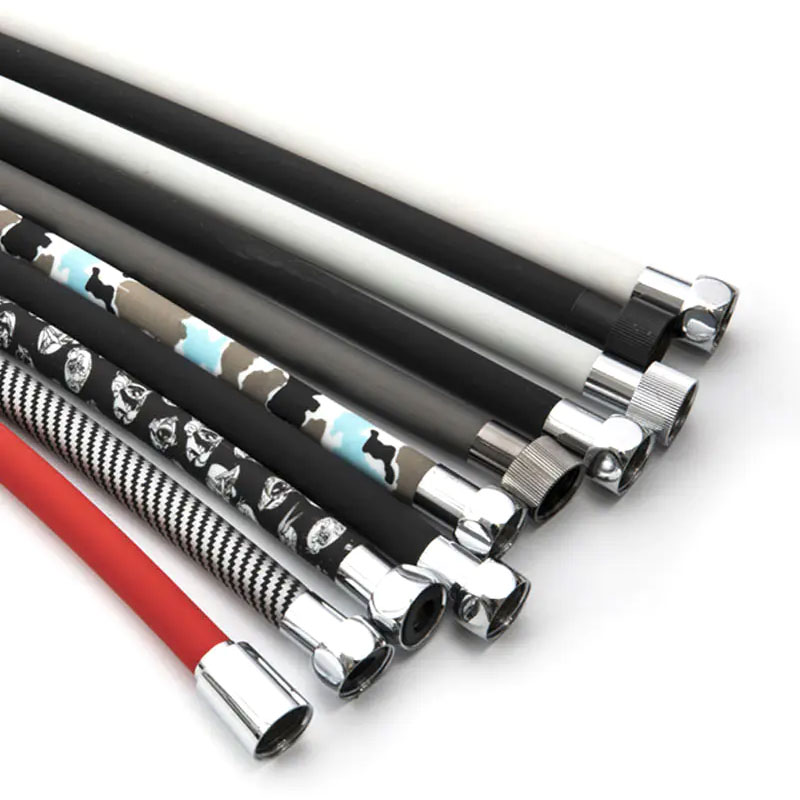 Silicone Shower Hose That Stays Flexible in Hot WaterMade from silicone, this shower hose remains supple in hot water and resists the hardening and cracking that affect ordinary hoses over time, making it a practical option where water-contact quality matters.View Product →
How to Get the Best Results From a Filtered Shower
If you decide to install one, a handful of habits separate a filter that keeps working from one that quietly stops doing its job.
- Match the filter to your water. Check your local water quality report; free chlorine and chloramine call for different media, and hardness levels tell you how often to replace the cartridge.
- Replace cartridges on schedule. Most last three to six months, and in hard water areas you should plan for the shorter end of that range.
- Keep the flow steady. Pair the filter with an anti-twist hose so the line does not kink behind you mid-shower; steady flow gives the media the contact time it needs and gives you an even spray.
- Clean or replace the shower head itself. Scale and biofilm inside the head are a separate problem that no upstream cartridge can fix.
- Judge results practically. Give it two to three weeks and watch the signs: less odor, less film on the glass doors, calmer skin after drying off.
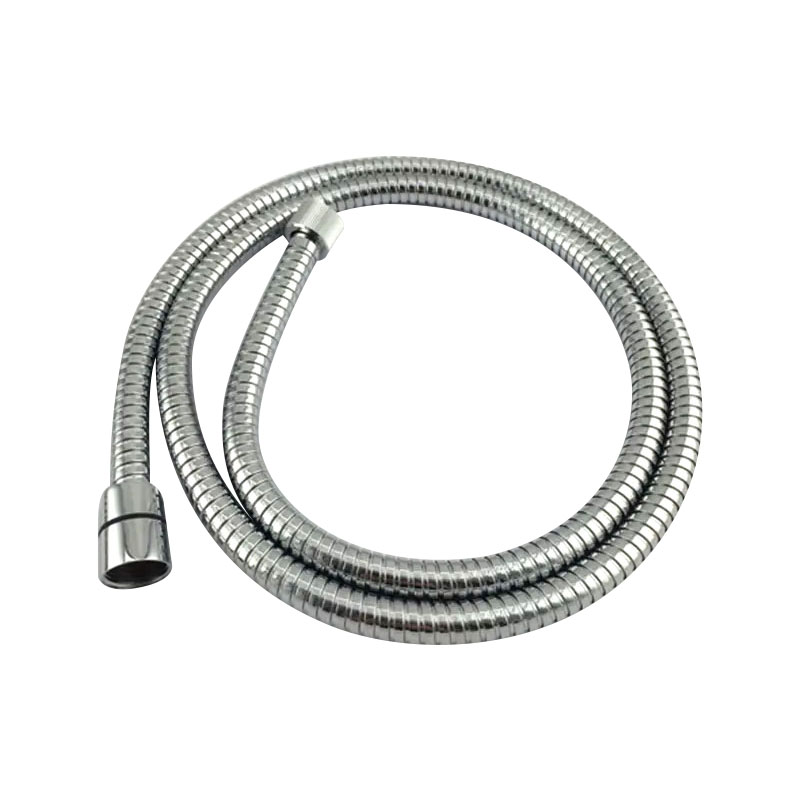 Anti-Twist Stainless Steel Shower Hose with Brass NutsThis 1.5m shower hose features SUS201 stainless steel, a 0.17mm thick chrome finish, anti-twist design, and brass nuts with a 15 bar nominal pressure rating, helping it stay tangle-free during daily use.View Product →
So, Do Shower Head Filters Work?
Yes, for the problems they are built to solve. A well-chosen cartridge measurably reduces chlorine and sediment, and most people notice it first through smell, then through skin and hair over the following weeks. It will not soften genuinely hard water or replace a certified purification system, and any brand promising otherwise is overselling.
Our mission has always been to provide healthy, safe, and convenient water for everyday life, and we see shower filtration as one sensible part of that picture, alongside well-made hoses and fittings that do not degrade the water passing through them. If you would like to know more about how we design and manufacture those components, you are welcome to read about our integrated manufacturing approach. Clean water is a chain, and every link in it should be built to the same standard.
News
-
-
After two weeks with a new activated carbon shower filter, many homeowners notice the same mixed result: the chlorine smell is gone, but the white spots on the...
READ MORE -
The short answer is mostly yes, but not always. Most shower hoses are built around a standard 1/2-inch BSP (British Standard Pipe) thread at both ends, so a re...
READ MORE -
Direct Conclusion: Silicone Shower Hose vs PVC in Long-Term Durability The practical difference is clear: a Silicone Shower Hose significantly outperforms PVC ...
READ MORE -
Quick Answer No, shower hoses do not fit all showers automatically — but most do, because roughly 90% of the market has standardized around one connector: the ...
READ MORE -
You notice it first in the drain after a shower: a few extra strands, then a small clump. You swap shampoos, skip the heat styler, and add vitamins, yet every ...
READ MORE

Contact us
-

-

+86-574-62321667
-

No.2 Chuangsheng West road, Wuma Industry Area, Lubu Town, Yuyao City, Zhejiang, China
Copyright © 2025 Yuyao Doflex Sanitary Ware Hose Co., Ltd., All Rights Reserved.
 Wholesale Bathroom Shower Hose Manufacturers